Face Biometric Authentication
  Biometric Check with Voice Match
  Face Biometric 2FA/MFA
  SMS 2FA/MFA
  Call Center Authentication
  Voice Biometric 2FA/MFA
  Document verification
  Biometric KYC with Liveness Face Matching
  Biometric KYC with Liveness Face Matching and AML check
  Authenticalls Revenue Intelligence
  IdentySign

Understanding the Bank of Ghana’s New Licensing Regime
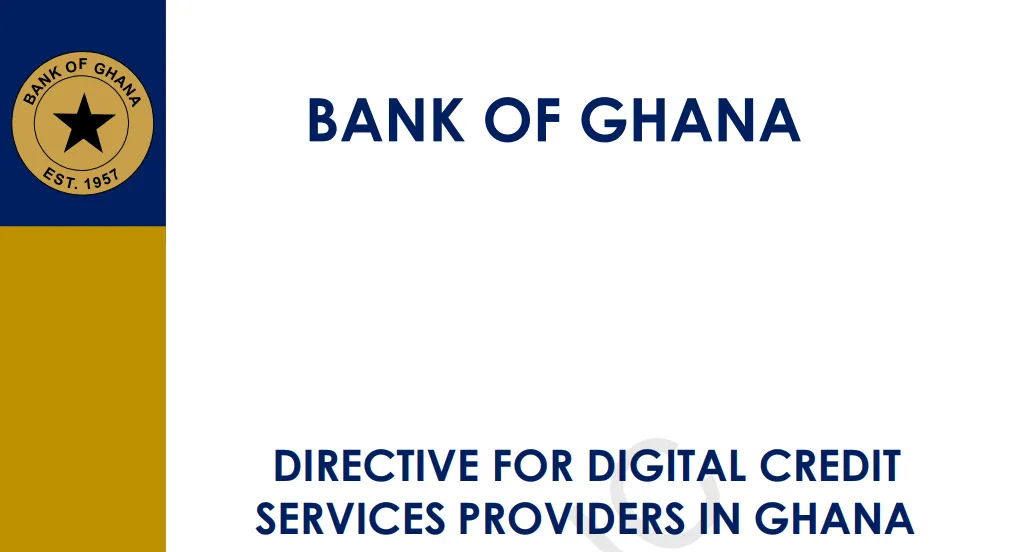
Ghana’s digital lending market is entering a new regulatory era. With the release of the Directive for Digital Credit Services Providers in Ghana, the Bank of Ghana (BoG) has moved decisively to formalise, regulate, and tighten oversight of the country’s rapidly expanding digital credit ecosystem.
The Directive introduces a full licensing framework for digital lenders while imposing extensive obligations around AML compliance, cybersecurity, customer protection, data privacy, operational resilience, and transaction monitoring.
For fintechs, mobile lenders, BNPL operators, embedded finance platforms, and app-based lenders operating in Ghana, the message is now unmistakable: growth alone is no longer enough. Regulatory-standard infrastructure has shifted from a competitive advantage to a fundamental requirement for business continuity.
And for many operators, the compliance gap is larger than it first appears.
The End of the “Move Fast” Era in Ghanaian Digital Lending
For years, digital credit across Africa expanded faster than regulation. Lightweight onboarding, automated lending decisions, aggressive customer acquisition, and outsourced operational infrastructure allowed digital lenders to scale rapidly into underserved markets. In Ghana, as in many emerging fintech ecosystems, speed became the defining metric of success.
But the same conditions that enabled rapid innovation also exposed deep structural vulnerabilities within the market. Regulators are now responding to a growing pattern of risks that emerged during this period of accelerated growth: identity fraud, weak KYC controls, poor AML supervision, cybersecurity vulnerabilities, data privacy breaches, unauthorized lending operations, and increasingly aggressive debt collection practices that generated both consumer backlash and regulatory concern.
The Bank of Ghana’s new Directive directly targets these weaknesses. Under the framework, every licensed Digital Credit Services Provider must now demonstrate the operational capability to maintain robust AML and fraud monitoring systems, customer due diligence procedures, Ghana Card compliance, cybersecurity safeguards, business continuity structures, and regulatory reporting systems capable of supporting ongoing supervisory oversight.
This marks a fundamental shift in the operating environment for digital lenders. Ghana is no longer simply a high-growth fintech market. It is becoming a supervised digital financial services ecosystem where operational resilience, governance, and compliance infrastructure are now central to market participation.
Read the Full Directive
Directive for Digital Credit Services Providers in Ghana (PDF)