Face Biometric Authentication
  Biometric Check with Voice Match
  Face Biometric 2FA/MFA
  SMS 2FA/MFA
  Call Center Authentication
  Voice Biometric 2FA/MFA
  Document verification
  Biometric KYC with Liveness Face Matching
  Biometric KYC with Liveness Face Matching and AML check
  Authenticalls Revenue Intelligence
  IdentySign
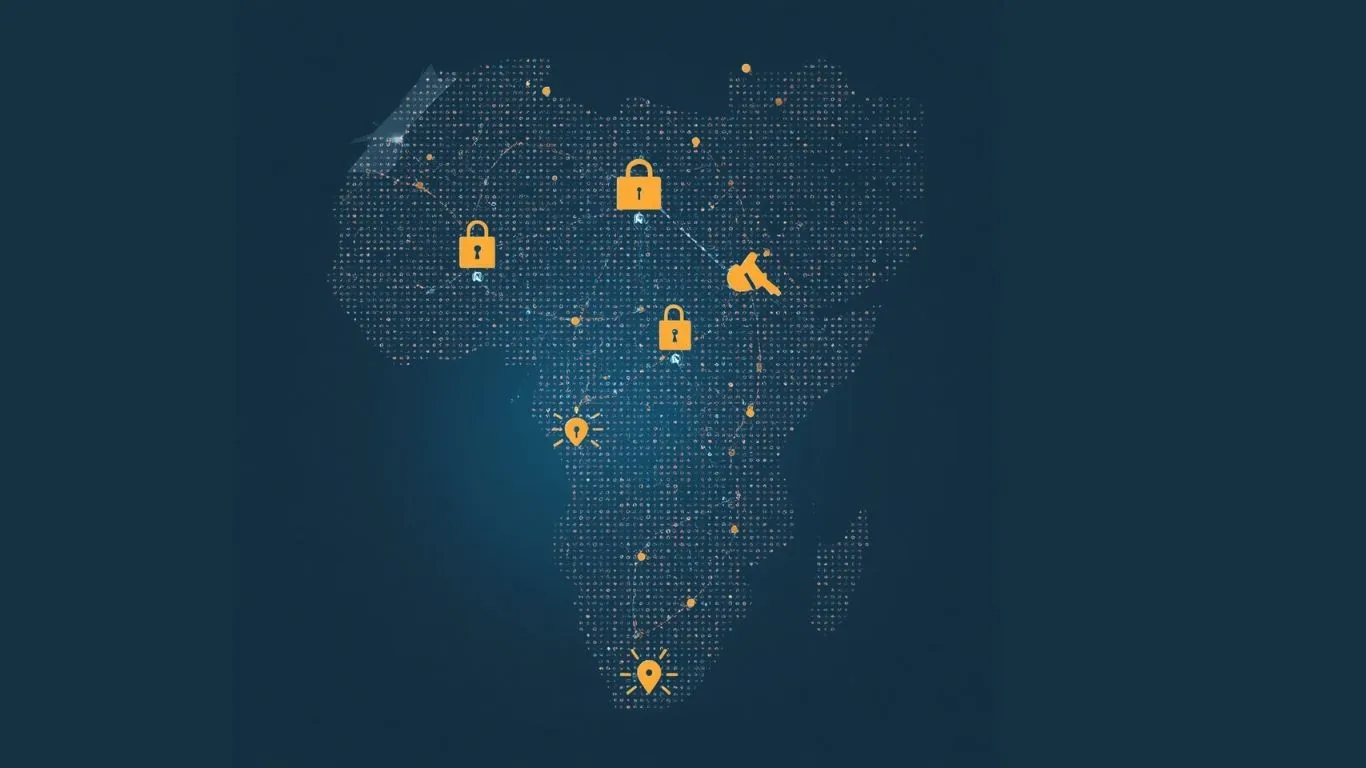

Compliance at scale: Authenticalls is solving Africa’s KYC fragmentation problem
For a long time, compliance in financial services was treated as a local obligation. A set of national rules, a checklist of requirements, a process adapted country by country. That model no longer holds.
Across Africa, digital financial services are scaling faster than the regulatory frameworks that govern them. Mobile money, fintech platforms, and cross-border services are expanding access to financial tools at an unprecedented pace. At the same time, the diversity of legal systems across 54 countries is creating a structural challenge that cannot be ignored.
The gap is no longer just regulatory. It is operational.
The reality is simple. Financial services are scaling regionally, but compliance remains fragmented nationally. Each country defines its own KYC requirements, documentation standards, and verification thresholds. For any company operating across multiple markets, this creates a multiplication problem.
Compliance is no longer a single process. It is a collection of parallel processes, each with its own constraints.
This is not a marginal issue. The rapid growth of mobile money and fintech ecosystems has significantly increased exposure to financial crime risks, particularly money laundering. Regulators are responding, but not in a unified way. Instead, requirements evolve independently across jurisdictions, reflecting local priorities, legal traditions, and levels of market maturity.
The result is a patchwork.
For financial institutions, this patchwork introduces both risk and inefficiency. Relying on inconsistent or incomplete KYC processes can lead to regulatory exposure. Overcompensating with overly strict controls can slow onboarding, reduce access, and undermine the very financial inclusion these services aim to support.
The traditional response does not scale. Integrating a different KYC provider or compliance workflow for each country quickly becomes operationally unsustainable, costs increases, systems get fragmented, and user experience deteriorates.
What appears to be a regulatory challenge is, in fact, an infrastructure problem.
A sustainable model for pan-African financial services must reflect how these businesses actually operate. They do not expand one country at a time in isolation. They build regional networks, unified platforms, and shared user bases that move across borders.
Compliance must follow the same logic. The key is not to eliminate regulatory diversity, but to operationalize it. To build systems that can interpret and apply local requirements without forcing businesses to rebuild their compliance stack for every new market.
This is where Authenticalls positions itself.
Instead of requiring financial institutions to onboard a different KYC provider in each country, Authenticalls offers a unified compliance layer that operates across multiple African jurisdictions. Local regulatory requirements are embedded into the infrastructure, ensuring that identity verification processes remain aligned with country-specific rules while being delivered through a single integration.
For pan-African companies, this fundamentally changes how compliance is managed.
Rather than coordinating multiple vendors, adapting to fragmented standards, and maintaining parallel systems, they can rely on a single partner to handle KYC across markets. This reduces operational complexity at its core. Expansion into new countries no longer requires rebuilding compliance workflows from scratch. It becomes an extension of an existing system.
At the same time, this model preserves what regulators expect. Verification processes remain locally compliant, auditable, and aligned with evolving legal frameworks. The abstraction happens at the infrastructure level, not at the expense of regulatory rigor.
For users, the experience becomes more consistent.
Onboarding flows do not need to be reinvented for each country, reducing friction while maintaining the necessary level of assurance.
For businesses, the benefits are both operational and economic.
Centralized infrastructure lowers integration overhead, simplifies vendor management, and creates efficiencies that translate into more predictable and scalable cost structures.
This approach reflects how financial services are actually growing across Africa. Not as isolated national products, but as interconnected platforms serving users across borders.
In that environment, compliance cannot remain fragmented. It must become a shared layer. One that is robust enough to handle local complexity, but simple enough to support regional scale.
Authenticalls is built with that premise in mind.